



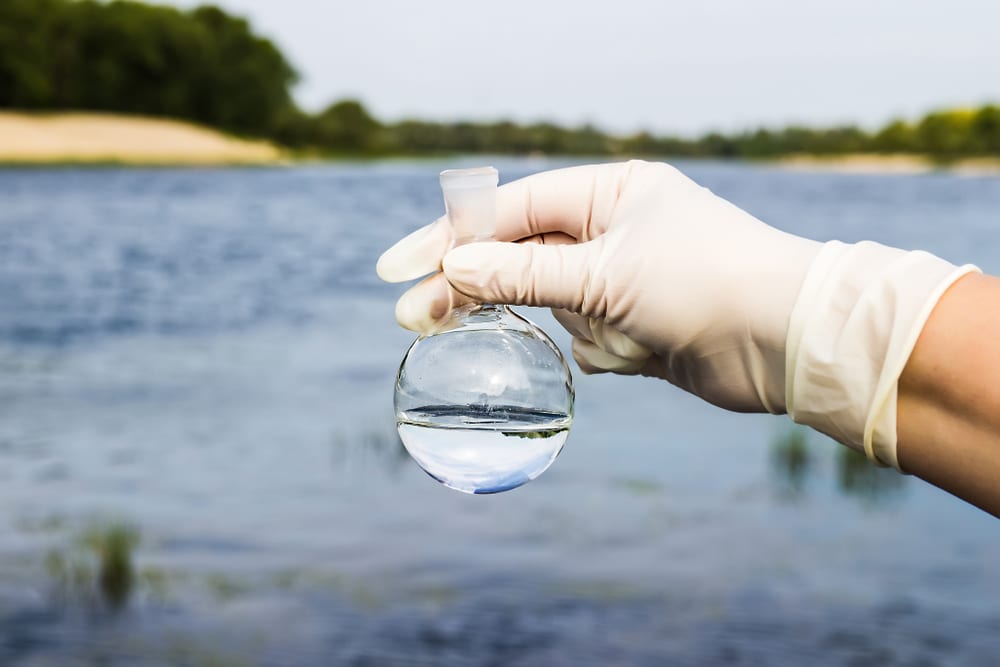
Routine monitoring programs are necessary to determine the health of Lake Erie. Many of these monitoring programs focus on scientists doing the work, but programs that involve citizens can perform a dual function: collecting data on Lake Erie water quality as well as educating people on what they can do to keep the environment healthy.
Charter fishing boats spend several days per week on the lake with citizens who already have an interest in Lake Erie’s health. Training charter captains how to collect water samples can increase existing monitoring programs and provide a valuable learning experience to anglers.
In 2012, charter boat captains began to collect water samples in the western basin of Lake Erie under Ohio EPA guidance. Stone Laboratory took over coordination of the sampling program the following year, with funding provided by Ohio EPA. Every week during fishing season, the captains collect a water sample and measure water temperature and water clarity at locations they visit during charter trips.
Stone Laboratory staff retrieves the samples from the captains and returns to the laboratory for analysis. In addition, samples are collected during Stone Lab field trip cruises, getting more than 6,000 kids each year involved in this Lake Erie protection effort.
The captains have collected more than 550 samples since June 2013 throughout the western basin from Toledo to Huron.
Data from the captains’ samples are used by lake managers and scientists tracking algal blooms in Lake Erie, by NOAA and NASA researchers linking satellite observations of the lake to bloom conditions, and by University of Toledo researchers collecting data on Lake Erie water quality.
A harmful algal bloom (HAB) is any large increased density of algae that is capable of producing toxins or has negative impacts on aquatic organisms. In freshwater, such as Lake Erie, those algae tend to be cyanobacteria — more commonly known as blue-green algae — which are always present in the water to some extent, but which grow excessively in warm water with high concentrations of phosphorus and nitrogen. Cyanobacteria produce a toxin called microcystin, which affects the liver, nervous system and skin, and potentially causes cancer in humans. Reducing the amounts of phosphorus and nitrogen that enter Lake Erie will reduce the size of the bloom.